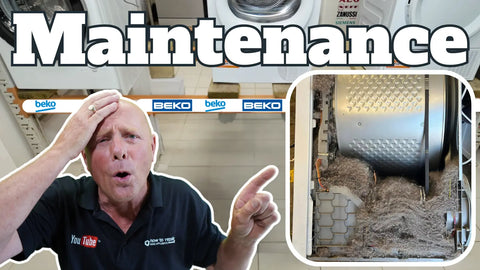
Customers Are Learning How Bad Heat Pump Tumble Dryers Really Are
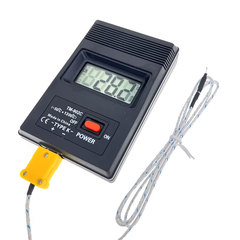
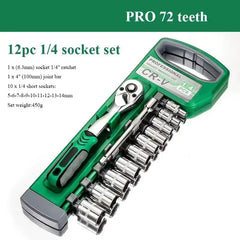
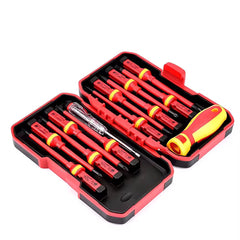
Tools Required



Heat pump tumble dryers are sold as the efficient, modern choice, yet many owners find them slow, fussy and expensive to keep running. One customer in Boston, Massachusetts, recently showed us exactly why. His client's rented flat had been through three heat pump dryers in eight years, and the tenants were waiting around six hours to dry small loads. So rather than buy a fourth, he fitted a new LG stacked washer and vented tumble dryer, with a proper vent run out through the back wall.
He sent us the photos, and the story is too good not to share.
Exhibit 1: 3 heat pump dryers in eight years.

(Beko heat pump tumble dryer stacked on top of a Beko washing machine in a rented flat's laundry cupboard. The landlady was on her third dryer in eight years.)
This is where the story starts. A stacked Beko washing machine with a Beko heat pump dryer, squeezed into a laundry cupboard in a rented flat. It looks tidy enough and it even carries an Energy Star label. The trouble is in the numbers:
Three dryers in eight years: That averages under three years per machine.
Around six hours to dry a very small load: The tenants simply put up with it.
About $1,200 for another heat pump dryer: That was the quote for a straight replacement.
Paying $1,200 for a fourth machine of the same type made no sense. So Brendan, whose team did the work for the owner, suggested something different.
Why heat pump tumble dryers cause so many problems?
I put it plainly in his reply to Brendan: Heat pump technology works well for heating and cooling, but not for tumble dryers.
A heat pump dryer doesn't blow warm, damp air outside. Instead it runs a small refrigeration circuit (a compressor, refrigerant and two heat exchangers) to heat the air, pull the moisture out of it as water, and send the same air back round the drum. That closed loop is what makes it efficient on paper. It's also where the problems come from:
1. Long drying times: A heat pump dryer runs at a much lower temperature than a vented dryer. That's gentler on clothes but slow, and if anything is slightly off (a clogged filter, a dusty heat exchanger, an overloaded drum) a cycle can stretch out for hours.
2. More parts to go wrong: Compressors, refrigerant circuits, water pumps, sensors and control boards all sit in a box that a vented dryer simply doesn't need. When the sealed system fails, the repair is often uneconomical.
3. Constant cleaning: Fluff that a vented dryer blows outside has to be caught inside a heat pump dryer. That means the door filter, the secondary filter and the heat exchanger all need cleaning regularly, or performance drops off quickly.
4. Water to deal with: The moisture removed from your washing ends up in a tank you empty by hand, or in a drain hose that has to be plumbed in.
5. Expensive to replace: As this landlady found, the "efficient" dryer becomes very expensive when you're buying a new one every two or three years.
That's why we hear the same complaint so often: "my heat pump dryer takes forever." In many cases, nothing is technically broken. The machine is just doing what heat pump dryers do.
Exhibit 2: the new LG stack with a proper vented dryer
 (New LG stacked washing machine and vented tumble dryer installed in a laundry cupboard, with a single central control panel)
Instead of spending around $1,200 on yet another heat pump dryer, the owner put the money towards a complete new LG stacked unit (a washing machine and a vented tumble dryer in one tower). It was on offer, and Brendan picked it up for around $1,500–$1,600.
There's a bonus on the washing machine too. The drum is a split drum, so it can be taken apart for repair. Many modern washers use sealed tubs, which turn a simple bearing failure into a write-off. LG's own sales adviser admitted their technicians "don't exactly love working with them" because the job takes a few hours, but it can be done. For anyone who cares about repairing rather than replacing, that's good news.
The hard part: fitting a proper dryer vent
A vented dryer is only as good as the duct behind it. This is the part of the job most people skimp on, and it's the part Brendan and his team got right.

(White self-closing dryer vent cover fitted through the rear brick wall of an apartment building)
Here's how the vent was fitted:
1. A 4-inch (about 100 mm) rigid duct, the standard size for a domestic vented dryer.
2. A short, straight run of about 20 feet (roughly 6 metres) at most.
3. Only two 90° bends. Every bend slows the airflow and gives fluff somewhere to settle, so fewer is always better.
4. A self-closing flap on the outside wall. It opens when the dryer pushes air out and shuts when it stops.
5. Built to be taken apart. The duct can be removed easily, so they can run a cleaning brush through it from time to time.
Cutting through the back wall of an old brick building is hard work, and the vent installation cost around $2,000. But it's the difference between a dryer that works well for years and one that struggles from day one.
Why the outside vent matters?
My advice on wall vents is simple: If you vent through a wall, you need the right equipment. A good outside vent is important to stop fluff building up. It should close automatically when the dryer is off. This also helps stop insects or rodents getting into the pipe at the back.
A cheap open grille, a long flexible hose or a duct full of kinks will all choke the airflow. When that happens, a vented dryer runs hotter and slower, and fluff builds up in the duct where it becomes a fire risk. A short, smooth, rigid run with a proper self-closing flap avoids all of that.
Goodbye to the heat pump dryer
 (The old Beko heat pump tumble dryer and washing machine stacked at a scrapyard beside a pile of scrap metal)
And this is where the old pair ended up. Brendan's friend (another Irishman, as it happens) took the Beko heat pump dryer and washing machine on their final journey to the scrapyard.
What did it all cost?
| Option | Approximate cost | What you get |
|---|---|---|
| Replace like for like with another heat pump dryer | ~$1,200 | The fourth heat pump dryer in eight years, the same six-hour cycles and the same old washer |
| New LG stacked washer and vented dryer | ~$1,500–$1,600 | A new washer (with a repairable split drum) and a new vented dryer |
| Wall vent installation | ~$2,000 | A 4-inch rigid duct, two bends, a self-closing outside flap and a run you can clean |
The vented route costs more on the day. But it replaces both machines, ends the six-hour drying cycles, and gets the owner out of a cycle of buying a new dryer every few years. As I said, we hope these new machines “stand the test of time, unlike the heat-pump nonsense that came before.”
Heat pump dryer vs vented dryer: which should you choose?
| Heat pump dryer | Vented dryer | |
|---|---|---|
| Needs an outside vent | No | Yes, ideally a short, rigid duct |
| Drying time | Long, often several hours | Much quicker |
| Running cost per cycle | Lower | Higher |
| Purchase price | Higher | Lower |
| Complexity | High (compressor, refrigerant, pump) | Low (heater, motor, fan) |
| Ease of repair | Often difficult or uneconomical | Usually simple and affordable |
| Regular maintenance | Several filters plus the heat exchanger | Lint filter, plus an occasional duct clean |
Our view: if you can fit a proper vent to an outside wall, a vented tumble dryer is usually the better long-term choice. It's quicker, simpler and much easier to repair. A heat pump dryer only really makes sense where venting truly isn't possible, and even then you need to keep on top of the cleaning.