Washing Machines

LG FH4U2VCN2 Washing Machine Gone From IE to FE Error Code After Replacing Valve

October 05, 2026
Customer Question

I've got a LG FH4U2VCN2 washing machine, and I had the IE error. Bought a new inlet valve (but it's got a 3 solenoid system, not 2 like the one in the video.) I installed that, but it's gone from the IE error to FE (water continuously flowing into the machine.) On the valve, there's 3 different coloured electrical connections; red, blue and white. I've found that disconnecting the white connection, stops the continuous flow. However, if I want to put a big wash in the machine, I can only use the speed 15 wash. Any other wash, the machine won't take enough water in, and I end up with the IE error again. I've taken the valve out of the machine, connected it to the water supply, and no water comes through. So the valve is ok, right? So now I'm thinking it may be a main board fault. Would I be correct in thinking this? Thanks.

Parts for This Model See compatible parts for FH4U2VCN2
Paul
Paul Repair Expert
Hi Tony,

Excellent job on the troubleshooting you’ve done so far regarding your LG FH4U2VCN2 Washing Machine. Removing the valve and testing it directly on the mains water supply to confirm it holds pressure was a very smart move. You are absolutely right—because no water comes through when it's disconnected from the machine, the valve itself is mechanically sound.

The FE error code stands for "Fatal Error" or "Overflow Error," meaning the pressure switch has detected that there is far too much water in the drum. Since the valve is mechanically okay, the continuous flow is happening because that specific solenoid is receiving constant electrical power when it shouldn't be, forcing it to stay open.

Looking at the symptoms, there are four likely scenarios we need to look at:

1. AC vs. DC Voltage Compatibility
Many modern machines, including certain LG models, have switched over from traditional AC water valves to DC water valves. If you have accidentally fitted a standard 230v AC valve into a machine designed for a lower voltage DC valve (or vice versa), it will cause erratic behavior, continuous filling, or immediate component failure.

  • Action: Check the label or stamped writing on your original valve and compare it to your new one. You need to clarify that the replacement valve is the exact same voltage type (e.g., 220-240v AC versus a 12v or 24v DC valve).


2. Incorrect Wiring Configuration
Because this is a 3-solenoid valve, the order of those red, blue, and white connections is critical. Each solenoid directs water through a different chamber in the soap dispenser (pre-wash, main wash, and fabric softener). If the wires have been mixed up, the machine might be trying to send a short burst of water to one compartment, but due to the wiring, it's constantly feeding another.

  • Action: Double-check your original photos (if you took them) to ensure the white wire is definitely supposed to be on that specific terminal.


3. An Incorrect Replacement Valve
Even if the new valve looks identical and has 3 solenoids, aftermarket or slightly different LG valves can sometimes have the electrical spade terminals in a different physical sequence internally. Plugging the wires back in their original positions might actually be powering the wrong solenoid.

  • Action: Compare the new valve side-by-side with the old one, looking closely at the molding and where the coil terminals are positioned.


4. A Main Board (PCB) Fault
If you are 100% certain the valve is the exact correct part, the correct voltage, and the wiring configuration is spot on, then your suspicion about the main board is likely correct.

The circuit board uses electronic switches—either small components called "triacs" or miniature relays, depending on the exact board design—to send power to the solenoids when water is needed. When an original valve fails (which likely caused your first IE error), it can short-circuit and draw too much current. This sudden spike can either blow a triac or weld the mechanical contacts of a relay shut.

In both cases, the component fails in the "closed" (always on) position. This means the moment you turn the machine on, the board permanently sends voltage to that white wire, holding the valve open and triggering your FE overflow error.

How to prove it:
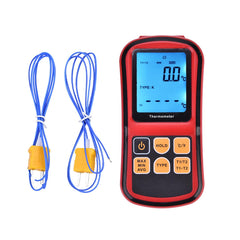
If you have a multimeter, you can test this safely. (If you don't, you can get a new one via our Multimeter Amazon Affiliate Link)

  1. Reconnect everything, but keep the lid off so you can access the valve connections.

  2. Set your multimeter to the correct voltage setting (AC or DC, depending on what is written on the valve).

  3. Turn the washing machine on at the plug, but do not start a wash cycle.

  4. Carefully test across the connections for the white wire.

If you get a reading (e.g., 230v AC or the respective DC voltage) before a cycle has even been selected, the switch on the main board is fried and is sending constant power.

If this turns out to be a board fault, you can often have the board repaired by a specialist who can solder a new triac or relay onto it, which is significantly cheaper than buying a brand-new board.

Let me know what you find when you check the valve voltage and test the wiring!

Regards,
Paul

Parts for This Model

Showing compatible parts for model FH4U2VCN2

Request a part →
Finding compatible parts…