
How to Test an NTC Thermistor, Bosch Dryer WTE84106GB/45
I've bought a second hand Tumble Dryer and the seller said it takes a long time to dry the clothes, so I've stripped it down and clean all the internals from dust and fluff. While I had it stripped down I tested the heater for continuity and it was fine. when I tested the NTC part No: 9000014369 at the Heater it showed open circuit on my Multimeter which I took that the NTC was bad. So I ordered another one from eBay and when that came I tested that, but that too was showing open circuit. Am I right to believe that the NTC I've bought is bad because I thought it should show some resistance at room temp or have I tested these wrong. I'm just looking for some clarification as I ask the company that sold me the Part and they couldn't tell me and their reply was "Sorry we stock many spare parts and aren't qualified to assist with technical queries of this nature".. I'll look forward to hearing from you. Best Regards Damien.
Tools Required
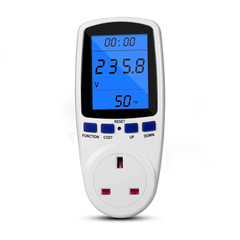
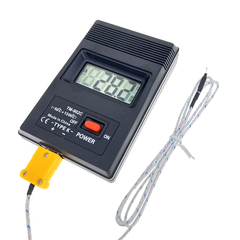

Hi Damien,
Thanks for your email. I'm glad you're trying to repair your appliance instead of throwing it away.
Here are some instructions to help you test the NTC sensor. You might need a better multimeter. Once you get an ohms reading on your meter, warm the NTC sensor with your fingers. As the temperature rises, the NTC sensor will adjust.
Some people don't know about the hidden bars, which are moisture sensors inside the tumble dryer. Sometimes, film can build up on these bars, giving false readings. I've added a video to help with this.
To test tumble dryers, set them to manual with a preset drying time. This usually bypasses most of the automatic heating system, letting you test it better.
A good tool is a meter reader and a temperature sensor that goes inside the door. This shows when the heating system turns on and off as it reaches the temperature. You can also use the NTC sensor meter to read the temperature inside the tumble dryer. This is an efficient way to diagnose problems.
I hope this helps!

Here's a detailed guide to testing the NTC thermistor in your Bosch WTE84106GB/45 dryer.
What is an NTC Thermistor?
An NTC (Negative Temperature Coefficient) thermistor is a temperature-sensing component that changes its electrical resistance as temperature fluctuates. In your dryer, it monitors drum temperature to regulate heating cycles and prevent overheating. When the thermistor fails, the dryer may overheat, underheat, or refuse to start.
Tools You'll Need
- A digital multimeter (preferably one with good ohms accuracy)
- A temperature probe or infrared thermometer
- Access to warm water or a heat source
- The dryer's service manual or wiring diagram
Step-by-Step Testing Process
1. Disconnect the dryer from power
Always unplug the appliance before testing electrical components. Safety first.
2. Locate the NTC thermistor
In the Bosch WTE84106GB/45, the NTC sensor is typically mounted near the heating element or exhaust duct. Consult your manual for the exact location and how to access it safely.
3. Set your multimeter to ohms (Ω)
Switch your meter to the resistance setting. At room temperature (around 20°C), a functioning NTC thermistor usually reads between 5,000 and 15,000 ohms, depending on the model. Check your manual for the exact specification.
4. Test resistance at room temperature
Connect the multimeter probes to the thermistor terminals. Record the reading. If it shows zero ohms, infinite resistance, or an erratic value, the sensor is likely faulty.
5. Apply gentle heat and observe the change
Warm the thermistor slowly using your fingers, warm water, or a heat gun (on low setting). As temperature increases, the resistance should decrease. This inverse relationship is the defining characteristic of an NTC thermistor. If resistance stays constant or increases, the component has failed.
6. Compare against expected values
Most NTC thermistors follow a predictable resistance curve. At 40°C, resistance might drop to 3,000–8,000 ohms; at 60°C, it could fall to 1,000–3,000 ohms. Your manual should provide a reference table.
Common Issues: Moisture Sensors
Your Bosch dryer also contains moisture-sensing bars inside the drum. Over time, lint, detergent residue, and mineral deposits can coat these bars, causing false moisture readings and premature cycle termination. If your dryer stops mid-cycle despite damp clothes, clean these bars with a soft, damp cloth. This is often overlooked but can resolve many apparent sensor faults.

Testing in Manual Mode
To isolate the NTC thermistor's behaviour, run the dryer on manual drying mode with a fixed time setting (e.g., 30 minutes). This bypasses the automatic temperature control, allowing you to observe whether the heating element responds independently. If the dryer heats normally in manual mode but fails in automatic, the NTC sensor is the likely culprit.
Diagnostic Tools
For a more thorough diagnosis, use a temperature probe or infrared thermometer to monitor the actual drum temperature while the dryer runs. Place the probe near the exhaust outlet or inside the door seal. If the drum reaches 80°C or higher without the heating element cycling off, the NTC thermistor is not signalling temperature changes correctly.
Alternatively, some technicians use a clamp meter to monitor current draw. A faulty thermistor may cause the heating element to run continuously or not at all, resulting in abnormal current patterns.
Next Steps
If your tests confirm the NTC thermistor is faulty, replacement is straightforward. Order the correct part for your model, disconnect the old sensor, and install the new one—usually a five-minute job. If testing shows the sensor is functioning normally, the issue may lie elsewhere in the heating circuit or control board.
I hope this detailed guide helps you diagnose and repair your dryer. Feel free to reach out if you have further questions.
Parts for This Model
Showing compatible parts for model WTE84106GB/45 FD