
Bosch WAU28T64GB/44 Washing Machine Control Panel Is Blank No Apparent Power
I have a Bosch WAU28T64GB/44 Washing Machine. The unit stopped working in the middle of a cycle, the plug totally burnt out, looks like over time (we did not notice it as its in a cupboard) it eventually totally fried. It didn't trip the consumer unit and the socket still works, I have changed the face plate, but socket wiring all perfectly fine and tested. I have changed the plug, but the unit doesn't turn on (turn the dial but the electronic panel is blank). resetting (unplugging and leaving) then restarting and trying to start a cycle also doesn't work. Taken the back off to look at the board and the front panel, cant see any obvious signs of anything else burnt out. I haven't taken out the board totally, so maybe something in there. I have multi meter, but not sure what to test to find the issue.
Tools Required
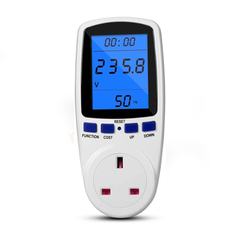
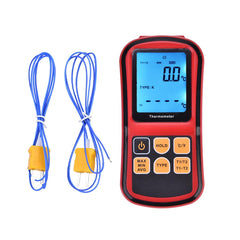
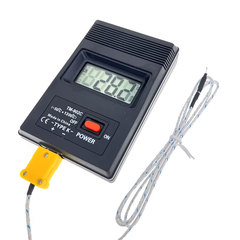

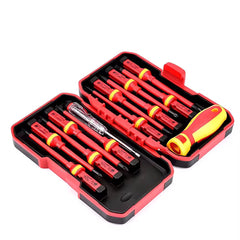

Hi David, thanks a lot for sending a video and sorry to hear about the problem regarding your Bosch WAU28T64GB/44 Washing Machine.
Following our telephone conversation, I am pleased that your washing machine is working again. However, as a tumble dryer and washing machine are connected to the same socket, there may be an intermittent fault on the ring main.
I am a domestic appliance engineer, not an electrician, so this is only general guidance. Please arrange for a qualified electrician to inspect the electrical system and confirm that the ring main is operating safely.
Why Your Washing Machine Isn’t the Problem: Overloaded Sockets, Spurs, and Ring Main Faults
1. The Combined Load: Washing Machine + Tumble Dryer
-
Washing Machine: Draws around 2,000W to 2,400W (approx. 9A to 10A) during the water heating phase of the wash cycle.
-
Tumble Dryer: Draws around 2,000W to 2,800W (approx. 9A to 12A) for long, continuous periods while drying clothes.
The "Double 13A Socket" Myth
2. How a Broken Ring Main Turns Into a Dangerous Spur
-
How a Healthy Ring Main Works: Electricity leaves the consumer unit (fuse board) and loops all the way around the house before returning to the same breaker. Because it forms a complete loop, the electrical load is shared in two directions. Each leg of the 2.5 mm² cable shares the current safely.
-
What Happens When a Ring Main Breaks (or on an Unfused Spur):
-
It Was Wired as a Spur: If the double socket is a spur branched off the main ring via a single 2.5 mm² cable, all the current for both machines has to travel down one single cable only rated for roughly 20A to 27A (depending on insulation and routing).
-
A Broken Ring Main ("Open Ring"): Even if the socket is supposed to be part of the ring main, if a wire has worked loose at the back of another socket elsewhere in the kitchen or house, or a junction box has failed, the ring loop is broken. You won't notice anything stops working—all your sockets will still stay live—but the ring has silently turned into two radial "spurs" still protected by a massive 32A breaker. That means a single 2.5 mm² cable can be overloaded with 22A+ without the 32A breaker ever tripping, causing severe overheating at the weakest connection point.
-
3. What You Need to Ask a Qualified Electrician to Do
-
Ring Final Circuit Continuity Test (End-to-End Test):
-
The electrician will disconnect the ring cables at the consumer unit and measure the resistance end-to-end on the Line (r1), Neutral (rn), and Earth (r2) conductors, followed by cross-connections (r1+r2).
-
This immediately proves whether the ring is continuous all the way around or if there is a break or loose connection somewhere on the circuit turning it into a spur.
-
-
Verify Whether the Socket is on the Ring or a Spur:
-
Inspect the cabling behind the damaged socket to confirm whether it is directly on the ring (two cables in/out), a spur off the ring, or a spur off another spur.
-
-
Insulation Resistance & Load/Earth Fault Loop Impedance (Zs) Testing:
-
Ensures the cable insulation hasn't been heat-damaged inside the wall or trunking and confirms that the circuit will trip safely under load.
-
-
Replace the Damaged Socket & Inspect the Plug Tops:
-
Both the wall socket and the appliance plug must be checked. Once a socket overheats or arcs, the heat travels straight up the brass pins of the appliance plug, softening the spring tension in the fuse holder and charring the wire terminations inside the plug top. If the plug top is discoloured or the pins are tarnished, the moulded plug must be cut off and replaced with a heavy-duty 13A plug.
-
-
Split the Load Moving Forward:
-
Idealy, have the washing machine and tumble dryer plugged into two separate single sockets on the intact ring main rather than sharing a single twin faceplate—or avoid running both machines at the exact same time.
-
Service Documents
Parts for This Model
Showing compatible parts for model WAU28T64GB/44